This is the 163rd Thevara
Paadal Petra Shiva Sthalam and the 46th Sthalam on the south side
of the river Kaveri in Chozha Nadu. This place, Akkur, maintained the same name from the 6th to the 7th Century.
In Periyapuranam, Sekkizhar records that
both Thirugnanasambandar and Thirunavukkarasu Swamigal came to this
temple after worshiping Lord Shiva at Thirukadaiyur Mayanam.
சிறப்புடைத் திருப் பதிஅத னிடைச்சில நாள் அமர்ந்து அருளோடும்
விறல் பெருங்கரி உரித்தவர் கோயில்கள் விருப்பொடும் தொழச்செல்வார்
மறைப்பெருந் திருக்கலயரும் உடன்பட வணங்கிய மகிழ்வோடும்
அறப்பெ ரும்பயன் அனையஅத் தொண்டரோடு அணைந்தனர் திருஆக்கூர்
...... திருஞானசம்பந்தர் புராணம்சார்ந்தார் தம் புகல் இடத்தைத் தான் தோன்றி மாடத்துக்
கூர்ந்து ஆர்வம் உறப்பணிந்து கோதுஇல் தமிழ்த் தொடைபுனைந்து
வார்ந்து ஆடும் சடையார்தம் பதிபலவும் வணங்கி உடன்
சேர்ந்தார்கள் தம் பெருமான்திருவீதி மிழலை யினை
...... திருநாவுக்கரசர் புராணம்Thirugnanasambandar and Thirunavukkarasu Swamigal and Vallalar have
sung hymns in praise of Lord Shiva of this temple. Both Sambandar and Appar
mention Lord Shiva as Akkur Thanthondriappar.
அக்கிருந்த ஆரமும்
ஆடரவும் ஆமையும்
தொக்கிருந்த மார்பினான்
தோலுடையான் வெண்ணீற்றான்
புக்கிருந்த தொல்கோயில்
பொய்யில்லா மெய்ந்நெறிக்கே
தக்கிருந்தார் ஆக்கூரின் தான்தோன்றி மாடமே
....... திருஞானசம்பந்தர்முடித்தா மரையணிந்த
மூர்த்தி போலும்
மூவிலகுந் தாமாகி
நின்றார் போலும்
கடித்தா மரைவேய்ந்த
கண்ணார் போலும்
கல்லலகு பாணி பயின்றார்
போலும்
கொடித்தா மரைக்காடே
நாடுந் தொண்டர்
குற்றேவல் தாம்மகிழ்ந்த
குழகர் போலும்
அடித்தா மரைமலர்மேல்
வைத்தார் போலும்
ஆக்கூரில் தான்தோன்றி யப்ப னாரே
....... திருநாவுக்கரசு
சுவாமிகள்
கூறுதிரு வாக்கூர்
கொடுப்பன போற்சூழ்ந்து மதில்
வீறு திருவாக்கூர் விளக்கமே
........ திரு அருட்பா
Consort : Sri Kadakanethri, Sri
Vaalnedunganni
Some of the important features of this temple are as
follows.
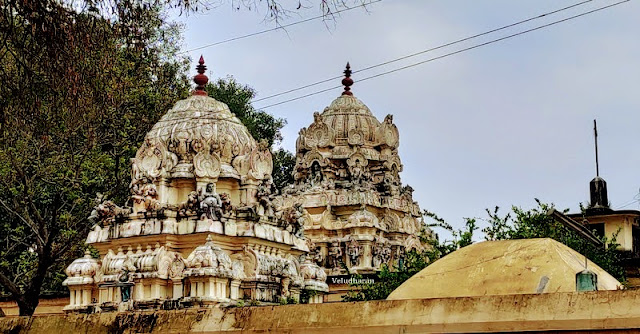
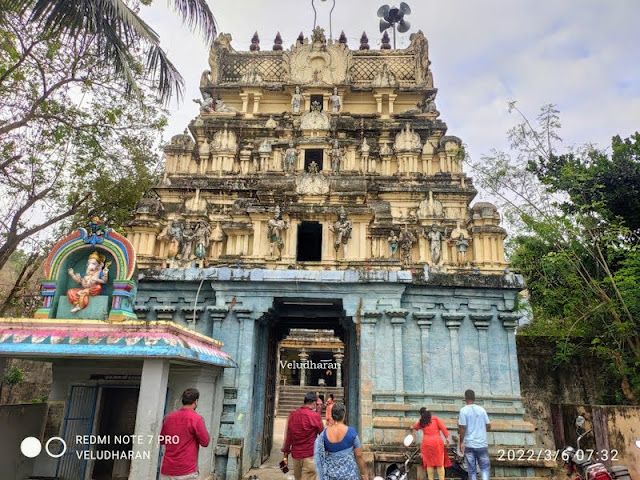
This is one of the mada koil built by Ko Chengat Chozhan. The
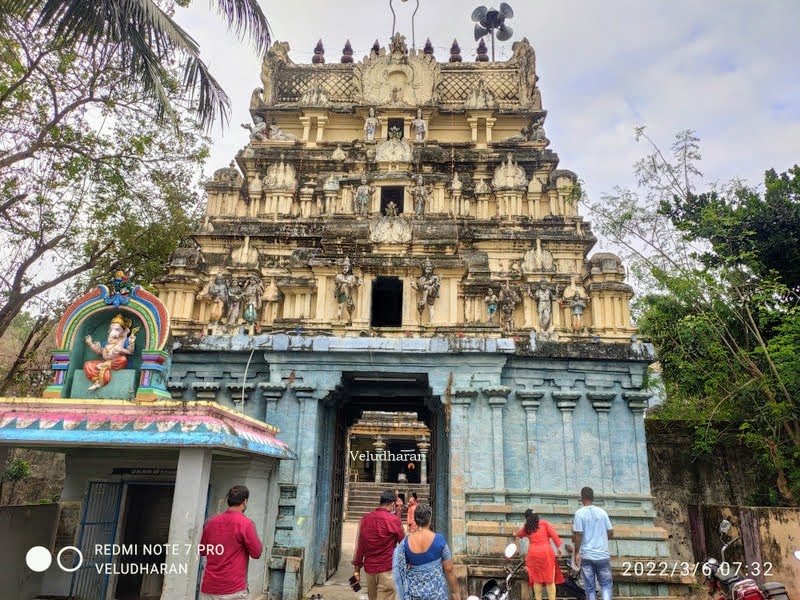
temple faces east with a 3-tier Rajagopuram. Balipeedam and Rishabam are in
front. Moolavar is Swayambhu, and there is a crack on the top. In Koshtam,
Vinayagar, Dakshinamurthy, Lingothbavar, Brahma, and Durgai.
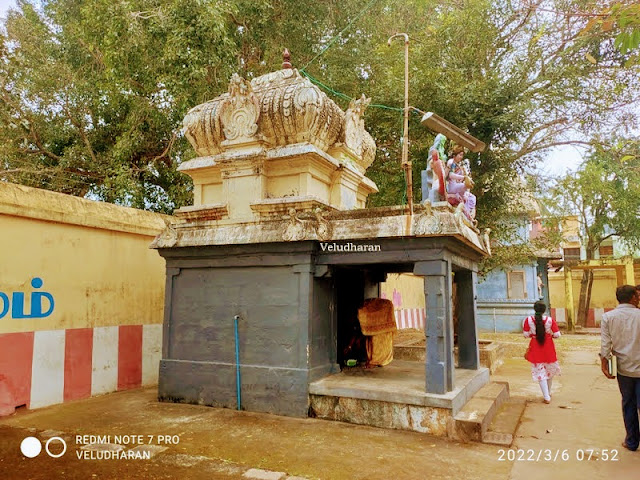
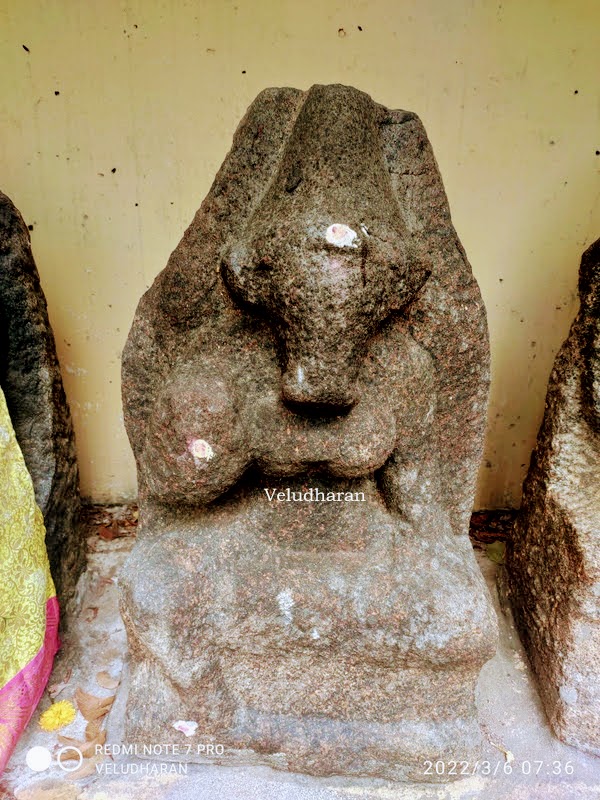
In praharam Vinayagar, Sri Murugan (Sannidhi is like a chariot),
Saraswati, Sundarar with his wives Sangili Nachiyar and Paravai Nachiyar, Bana
Lingam, Viswanathar, Visalakshi, Nalvar, Maha Lakshmi,
Arunagirinathar, Gajalakshmi, Kailasanathar & Parvatha Vardhini, Vayu
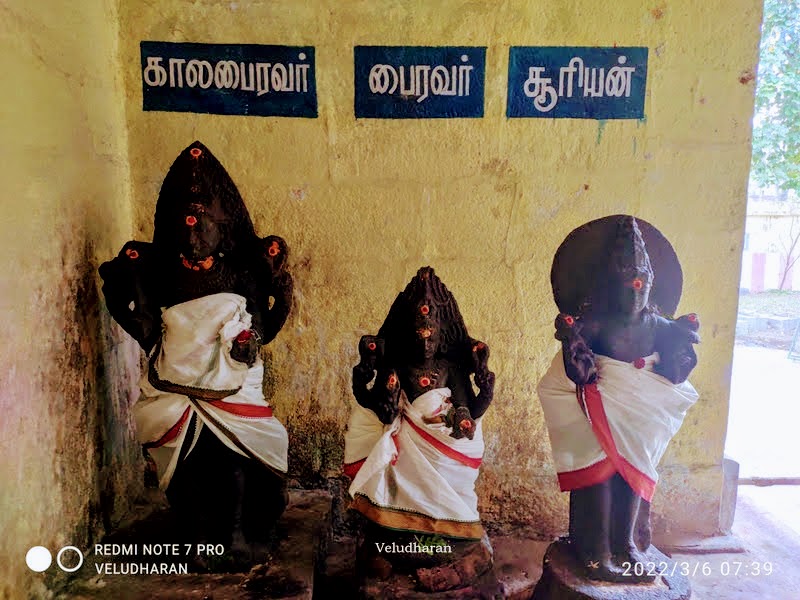
Lingam, Theyu Lingam, Appu Lingam, Navagrahas, Kala Bhairava, Bhairavar,
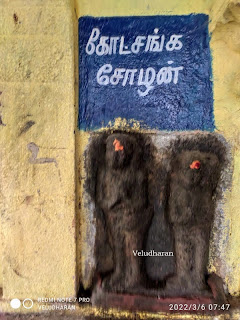
Suriyan, Ko Chengat Chozha worshiping Lord Shiva and Chandikeswarar. A Separate
Sannathi for “Aayirathil oruvar” with vimanam is also in the prakaram. The
Urchavar was moved somewhere for safe custody.
Ambal temple faces west on the right side of the moolavar and is in a standing posture.
The 15th-century Arunagirinathar has sung hymns in
praise of Lord Muruga of this Temple and mentions Lord Shiva as
Thanthondriappar.
வாழ்ந்தான்ற கற்புடைமை வாய்ந்தாய்ந்த நற்றவர்கள்
மான் போன்ற பொற்றொடிகள் தந்தோய்ந்த நற்புயமும்
வான் தீண்ட வுர்றமயில்
மிசையேறித்
தாழ்ந்தாழ்ந்த மிக்ககடல் வீழ்ந்தீண்டு வெற்பசுரர்
சாய்ந்தேங்க வுற்றமர்செய் வடிவேலா
தான்தோன்றி யப்பர்குடி வாழ்ந்தீன்ற நற்புதல்வ
தான்தோன்றி நிற்கவல
பெருமாளே
ARCHITECTURE
Even though the temple is claimed as a Mada Temple, actually the
main sannidhi and mandapas are constructed on a raised upana called veRRu
thalam. The veRRu thalam is on a padabandha adhistanam, with jagathy, kumudam,
Brahma kantha pilasters, and empty koshtams. 9 steps are provided to reach the
upper level.
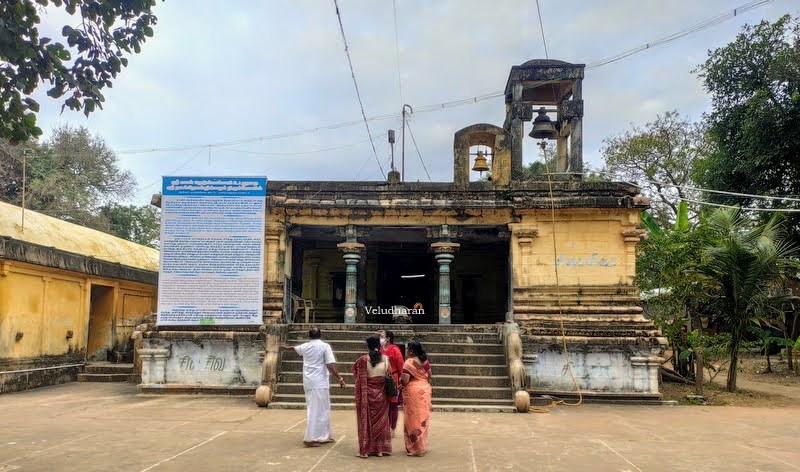
The sanctum sanctorum, antarala, ardha mandapam, maha mandapam, and
mukha mandapam are on the upper level. The vimanam is with sub upanam, pada bandha adhistanam, jagathy, muppattai kumuda, and Pattika. The bhitti
starts with vedikai. Brahma kantha pilasters and poo mottu pothyals. The
prastram is with valapi, kapotam, and bhoomi desam. The koshtas protrude
outside as padra salas. Dakshinamurthy, Lingothbavar, and Brahma are in the
upper-level koshtam. The vimanam measures 4.95 square meters. The superstructure above the prastram was built with bricks. The Vimanam is of the vesara
style. The tala koshtas and greeva koshtas are images of Dakshinamurthy,
Maha Vishnu, and Brahma. The sigaram is of vesara style with 4 maha nisis and 4
alpha nasis. Mandapas are of vavvalnethi style / Vandikoodu style, built during the Maratha period.




HISTORY
AND INSCRIPTIONS
Since Thirugnanasambandar has sung hymns on Lord Shiva of this
temple, this original temple, built by Ko Chengat Chozhan, might have existed
during the 7th century and was later reconstructed by the Chozhas and
further extended by the Pallavas and Vijayanagaras.
The inscriptions recorded from this temple belong to
Rajathirajan, Koperunchingan, and Vijayanagara King Krishnadevaraya. As per
the inscriptions, this place was in Rajendra Chozha Chaturvedi Mangalathu Akkur, and Lord Shiva was called Thanthondri Madamudayar, and the same was mentioned
in the Thevaram hymns sung by Thirugnanasambandar.
Thiribhuvana Chakravarti Rajaraja-III’s
18th reign year inscription records that the temple affairs are
taken care of by Perungudi Makkal, also called Koota Perumakkal.
Koperunchingan-I,
Azhakiya Pallavar Araiyar, also called Veeraprathabar, jailed
Hoysalas, received royalty from Pandya Kings, intruded into Chozha territory, worshiped Shiva Temples on the south side of the river Kaveri, gifted to those
temples, and renovated dilapidated temples. When he was
camping at Jayangonda Chozhavalanattu Akkur, he found that many lands were
not cultivated due to higher taxes, and people also started leaving the
Village. Sympathizing with their position, the King himself remitted the tax
dues from them, called them back, restored their original holdings, and asked
them to cultivate the lands. (AR 229 of 1925)
An inscription of the 17th reign year, without the King’s name,
records that Adal Amarnthan Suriyan Thillaimoovaayiran was suffering from a
disease and was getting relieved slowly, and gifted some land for worship and Padayal / Naivedyam.
Rajarajan-III’s 6th reign-year inscription records mention this place as Akkur alias Rajendra Simha Chathurvedimangalam and Lord
Shiva as Thanthondri Madamudayar. Further, the inscription records the gift of
land for burning perpetual lamps, and provision was made for the irrigation of those
lands.
Rajarajan-III’s 18th reign year inscription records
the gift of lands by many people for laying a road for taking Utsavars to the river Kaveri for a sacred bath / Theerthavari. The authorities of the village, who take care of the village affairs, ordered the land gifted for this purpose to be exempted
from Irayili. The Rajarajan-III’s 14th reign year inscription of Sri
Vaikundaraya Perumal Temple of the same Village records that permission was not
given for the sacred bath of Utsavar in Thanthondri Madamudayar Temple Tank. So
the temple authorities laid a new road to take Utsavar to the Kaveri River for
theerthavari. These 13th-century inscriptions show that conflicts existed between Shaivites and Vaishnavites.
Krishna Devaraya’s 1517 CE inscription records the exemption of
taxes like Chodivari, Soolavari, and Arasuperu for the Temple lands.
Maha Kumbhabhishekam was conducted after renovations on 15th September
1960, 06th April 2001, and 10th May 2010.
Ref:Annual Report on South Indian Epigraphy, Year 1925.
LEGENDS
As
per the legend, Ma Parvati separated from Lord Shiva and came to earth. She was born
to Athiri Maharishi and brought up as Valnedunganni. Lord Shiva went into dhyana.
Agasthiyar came and asked for Shiva and Parvati’s darshan. Lord Shiva told Ma Parvati to chant the Swayamvara mantra, and then Lord Shiva would marry her. As
per the Lord’s instruction, Ma Parvati did the penance for Lord Shiva, chanting the swayamvara
mantra. Satisfied by her devotion, Lord Shiva married Ma Parvati on the Panguni month Vasantha Navaratri day. Hence, this day is celebrated in a grand manner at this
temple. Devotees worship Lord Shiva and Parvati for the marriage boon, to remove
the obstacles of marriage, and the reunion of separated couples.
Sirappuli
Nayanar was born in this place. He used to serve food to all the devotees who
visited this place, without saying no. It is believed that he
attained mukti at this place.
There is a crack on the top of the moolavar, and it is believed that
Lord Shiva came out of this Shiva Linga and went to Thirukadaiyur to kick the
Yama / Kaalan with his leg for Markandeya.
A Separate Sannathi for ”Aayirathil Oruvar” special Moorthy with
vimanam. As per the legend, during the construction of this temple, the Chozha Ko
Chengat Chozha was suffering from an ailment. He prayed to Lord Shiva to
relieve him from the ailment. The King heard a divine voice saying that he would be
relieved from the ailment if he fed / annadhanam to 1000 people for 48 days. On the 48th day, he found that the count was short by one for 1000, so he
prayed to Lord Shiva. To satisfy the King, Lord Shiva came in the form of an old
man to tally the count to 1000. Hence, Lord Shiva is called “Ayirathil oruvar”. This function is celebrated on Pooradam Nakshatra day in
Karthigai month. Hence, this function and annadhanam will be served on that day
every year. In addition to this, Thiruvathirai and Natarajar Utsavam in Margazhi
month every year will be celebrated in a grand manner.
As per the legend, during the excavation of an anthill, a Shiva Linga
was found. The excavation tool hit a mark on the Shiva Linga, which was formed
during the process of excavation. Depicting this legend, a bas-relief is
sculpted in the temple.
It is believed that Lord Shiva and Parvati gave the
kalyanakola darshan/wedding
kolam to the sage Agathiyar. To prove the same, Ma Parvati’s sannithi is on the
right side of Moolavar sannadhi.

 Sundarar- Thirugnanasambandar- Appar
POOJAS AND
CELEBRATIONS
Apart from regular poojas, special poojas are conducted on
Vinayagar Chathurthi in the month Avani (Aug – Sept), Thiru Karthigai in the
month Karthigai (Nov – Dec), Thiruvathirai in the month Margazhi (Dec – Jan), Makar Sankranti, 108 Conch abhishekams on somavaram / Mondays, and Sirappuli
Nayanar Guru pooja in the month Thai (Jan- Feb), Maha Shivaratri
in the month Masi (Feb – March), Full moon days, and monthly pradoshams.
In addition to the above, the Thirukalyanam utsavam of Lord Shiva with Parvati
in Panguni month, Vasantha Navaratri day, Thiruvathirai, and Natarajar utsavam in Margazhi month every year are celebrated in a grand manner.
TEMPLE TIMINGS
The temple will be open from 08.00 hrs to 11.00 hrs, and from 17.00 hrs to 20.00 hrs.
CONTACT
DETAILS :
The temple mobile numbers +91 9865809768 and +91 9787709742, and Nagaraja Gurukkal’s mobile number +91 75022 22850 may be contacted for
further details.
HOW TO
REACH
This place, Akkur, is on the way from Mayiladuthurai to
Porayar.
Akkur is about 12 km from Porayar, 16 km from Mayiladuthurai, 20
km from Sirkazhi, 41 km from Chidambaram, 50 km from Kumbakonam, and 258 km from
Chennai.
The nearest Railway Station is Mayiladuthurai.
LOCATION OF THE
TEMPLE: CLICK HERE


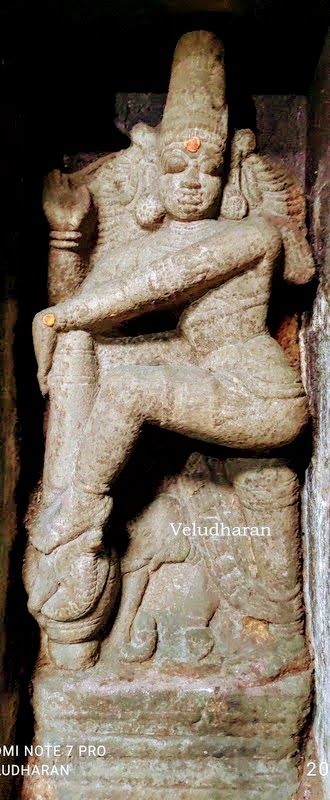
 Ko Chengat Chozha
 A Chozha King
 Varahi
 Chandikeswarar
 No.. It is a King


 Dwarapalakas


 --- OM SHIVAYA NAMA ---
The
Heritage visit to this Sri Thanthondreeswarar
Temple at Akkur was a part of the “Mada Temples Heritage Walk in Nagapattinam and
Mayiladuthurai Districts”, organized by “Chozha Mandala Varalatru Thedal Kuzhu
– GCHRG, on 05th and 6th March 2022. Thanks to V Ramachandran, Tahsildar of
Nagapattinam, who took us to all these Temples. This is the second visit to
this temple.
This is the 163rd Thevara
Paadal Petra Shiva Sthalam and the 46th Sthalam on the south side
of the river Kaveri in Chozha Nadu. This place, Akkur, maintained the same name from the 6th to the 7th Century.

In Periyapuranam, Sekkizhar records that
both Thirugnanasambandar and Thirunavukkarasu Swamigal came to this
temple after worshiping Lord Shiva at Thirukadaiyur Mayanam.
சிறப்புடைத் திருப் பதிஅத னிடைச்சில நாள் அமர்ந்து அருளோடும்
விறல் பெருங்கரி உரித்தவர் கோயில்கள் விருப்பொடும் தொழச்செல்வார்
மறைப்பெருந் திருக்கலயரும் உடன்பட வணங்கிய மகிழ்வோடும்
அறப்பெ ரும்பயன் அனையஅத் தொண்டரோடு அணைந்தனர் திருஆக்கூர்
கூர்ந்து ஆர்வம் உறப்பணிந்து கோதுஇல் தமிழ்த் தொடைபுனைந்து
வார்ந்து ஆடும் சடையார்தம் பதிபலவும் வணங்கி உடன்
சேர்ந்தார்கள் தம் பெருமான்திருவீதி மிழலை யினை
விறல் பெருங்கரி உரித்தவர் கோயில்கள் விருப்பொடும் தொழச்செல்வார்
மறைப்பெருந் திருக்கலயரும் உடன்பட வணங்கிய மகிழ்வோடும்
அறப்பெ ரும்பயன் அனையஅத் தொண்டரோடு அணைந்தனர் திருஆக்கூர்
...... திருஞானசம்பந்தர் புராணம்
சார்ந்தார் தம் புகல் இடத்தைத் தான் தோன்றி மாடத்துக்கூர்ந்து ஆர்வம் உறப்பணிந்து கோதுஇல் தமிழ்த் தொடைபுனைந்து
வார்ந்து ஆடும் சடையார்தம் பதிபலவும் வணங்கி உடன்
சேர்ந்தார்கள் தம் பெருமான்திருவீதி மிழலை யினை
...... திருநாவுக்கரசர் புராணம்
Thirugnanasambandar and Thirunavukkarasu Swamigal and Vallalar have
sung hymns in praise of Lord Shiva of this temple. Both Sambandar and Appar
mention Lord Shiva as Akkur Thanthondriappar. அக்கிருந்த ஆரமும்
ஆடரவும் ஆமையும்
தொக்கிருந்த மார்பினான் தோலுடையான் வெண்ணீற்றான்
புக்கிருந்த தொல்கோயில் பொய்யில்லா மெய்ந்நெறிக்கே
தக்கிருந்தார் ஆக்கூரின் தான்தோன்றி மாடமே
மூவிலகுந் தாமாகி நின்றார் போலும்
கடித்தா மரைவேய்ந்த கண்ணார் போலும்
கல்லலகு பாணி பயின்றார் போலும்
கொடித்தா மரைக்காடே நாடுந் தொண்டர்
குற்றேவல் தாம்மகிழ்ந்த குழகர் போலும்
அடித்தா மரைமலர்மேல் வைத்தார் போலும்
ஆக்கூரில் தான்தோன்றி யப்ப னாரே
கூறுதிரு வாக்கூர் கொடுப்பன போற்சூழ்ந்து மதில்
வீறு திருவாக்கூர் விளக்கமே
Consort : Sri Kadakanethri, Sri Vaalnedunganni
தொக்கிருந்த மார்பினான் தோலுடையான் வெண்ணீற்றான்
புக்கிருந்த தொல்கோயில் பொய்யில்லா மெய்ந்நெறிக்கே
தக்கிருந்தார் ஆக்கூரின் தான்தோன்றி மாடமே
....... திருஞானசம்பந்தர்
முடித்தா மரையணிந்த
மூர்த்தி போலும்மூவிலகுந் தாமாகி நின்றார் போலும்
கடித்தா மரைவேய்ந்த கண்ணார் போலும்
கல்லலகு பாணி பயின்றார் போலும்
கொடித்தா மரைக்காடே நாடுந் தொண்டர்
குற்றேவல் தாம்மகிழ்ந்த குழகர் போலும்
அடித்தா மரைமலர்மேல் வைத்தார் போலும்
ஆக்கூரில் தான்தோன்றி யப்ப னாரே
....... திருநாவுக்கரசு
சுவாமிகள்
கூறுதிரு வாக்கூர் கொடுப்பன போற்சூழ்ந்து மதில்
வீறு திருவாக்கூர் விளக்கமே
........ திரு அருட்பா
Consort : Sri Kadakanethri, Sri Vaalnedunganni
Some of the important features of this temple are as
follows.
This is one of the mada koil built by Ko Chengat Chozhan. The temple faces east with a 3-tier Rajagopuram. Balipeedam and Rishabam are in front. Moolavar is Swayambhu, and there is a crack on the top. In Koshtam, Vinayagar, Dakshinamurthy, Lingothbavar, Brahma, and Durgai.
In praharam Vinayagar, Sri Murugan (Sannidhi is like a chariot), Saraswati, Sundarar with his wives Sangili Nachiyar and Paravai Nachiyar, Bana Lingam, Viswanathar, Visalakshi, Nalvar, Maha Lakshmi, Arunagirinathar, Gajalakshmi, Kailasanathar & Parvatha Vardhini, Vayu Lingam, Theyu Lingam, Appu Lingam, Navagrahas, Kala Bhairava, Bhairavar, Suriyan, Ko Chengat Chozha worshiping Lord Shiva and Chandikeswarar. A Separate Sannathi for “Aayirathil oruvar” with vimanam is also in the prakaram. The Urchavar was moved somewhere for safe custody.
This is one of the mada koil built by Ko Chengat Chozhan. The temple faces east with a 3-tier Rajagopuram. Balipeedam and Rishabam are in front. Moolavar is Swayambhu, and there is a crack on the top. In Koshtam, Vinayagar, Dakshinamurthy, Lingothbavar, Brahma, and Durgai.
In praharam Vinayagar, Sri Murugan (Sannidhi is like a chariot), Saraswati, Sundarar with his wives Sangili Nachiyar and Paravai Nachiyar, Bana Lingam, Viswanathar, Visalakshi, Nalvar, Maha Lakshmi, Arunagirinathar, Gajalakshmi, Kailasanathar & Parvatha Vardhini, Vayu Lingam, Theyu Lingam, Appu Lingam, Navagrahas, Kala Bhairava, Bhairavar, Suriyan, Ko Chengat Chozha worshiping Lord Shiva and Chandikeswarar. A Separate Sannathi for “Aayirathil oruvar” with vimanam is also in the prakaram. The Urchavar was moved somewhere for safe custody.
Ambal temple faces west on the right side of the moolavar and is in a standing posture.
The 15th-century Arunagirinathar has sung hymns in
praise of Lord Muruga of this Temple and mentions Lord Shiva as
Thanthondriappar.
வாழ்ந்தான்ற கற்புடைமை வாய்ந்தாய்ந்த நற்றவர்கள்
மான் போன்ற பொற்றொடிகள் தந்தோய்ந்த நற்புயமும்
வான் தீண்ட வுர்றமயில் மிசையேறித்
தாழ்ந்தாழ்ந்த மிக்ககடல் வீழ்ந்தீண்டு வெற்பசுரர்
சாய்ந்தேங்க வுற்றமர்செய் வடிவேலா
தான்தோன்றி யப்பர்குடி வாழ்ந்தீன்ற நற்புதல்வ
தான்தோன்றி நிற்கவல பெருமாளே
மான் போன்ற பொற்றொடிகள் தந்தோய்ந்த நற்புயமும்
வான் தீண்ட வுர்றமயில் மிசையேறித்
தாழ்ந்தாழ்ந்த மிக்ககடல் வீழ்ந்தீண்டு வெற்பசுரர்
சாய்ந்தேங்க வுற்றமர்செய் வடிவேலா
தான்தோன்றி யப்பர்குடி வாழ்ந்தீன்ற நற்புதல்வ
தான்தோன்றி நிற்கவல பெருமாளே
ARCHITECTURE
Even though the temple is claimed as a Mada Temple, actually the main sannidhi and mandapas are constructed on a raised upana called veRRu thalam. The veRRu thalam is on a padabandha adhistanam, with jagathy, kumudam, Brahma kantha pilasters, and empty koshtams. 9 steps are provided to reach the upper level.
Even though the temple is claimed as a Mada Temple, actually the main sannidhi and mandapas are constructed on a raised upana called veRRu thalam. The veRRu thalam is on a padabandha adhistanam, with jagathy, kumudam, Brahma kantha pilasters, and empty koshtams. 9 steps are provided to reach the upper level.
The sanctum sanctorum, antarala, ardha mandapam, maha mandapam, and
mukha mandapam are on the upper level. The vimanam is with sub upanam, pada bandha adhistanam, jagathy, muppattai kumuda, and Pattika. The bhitti
starts with vedikai. Brahma kantha pilasters and poo mottu pothyals. The
prastram is with valapi, kapotam, and bhoomi desam. The koshtas protrude
outside as padra salas. Dakshinamurthy, Lingothbavar, and Brahma are in the
upper-level koshtam. The vimanam measures 4.95 square meters. The superstructure above the prastram was built with bricks. The Vimanam is of the vesara
style. The tala koshtas and greeva koshtas are images of Dakshinamurthy,
Maha Vishnu, and Brahma. The sigaram is of vesara style with 4 maha nisis and 4
alpha nasis. Mandapas are of vavvalnethi style / Vandikoodu style, built during the Maratha period.



HISTORY
AND INSCRIPTIONS
Since Thirugnanasambandar has sung hymns on Lord Shiva of this temple, this original temple, built by Ko Chengat Chozhan, might have existed during the 7th century and was later reconstructed by the Chozhas and further extended by the Pallavas and Vijayanagaras.
Since Thirugnanasambandar has sung hymns on Lord Shiva of this temple, this original temple, built by Ko Chengat Chozhan, might have existed during the 7th century and was later reconstructed by the Chozhas and further extended by the Pallavas and Vijayanagaras.
The inscriptions recorded from this temple belong to
Rajathirajan, Koperunchingan, and Vijayanagara King Krishnadevaraya. As per
the inscriptions, this place was in Rajendra Chozha Chaturvedi Mangalathu Akkur, and Lord Shiva was called Thanthondri Madamudayar, and the same was mentioned
in the Thevaram hymns sung by Thirugnanasambandar.
Thiribhuvana Chakravarti Rajaraja-III’s 18th reign year inscription records that the temple affairs are taken care of by Perungudi Makkal, also called Koota Perumakkal.
Koperunchingan-I,
Azhakiya Pallavar Araiyar, also called Veeraprathabar, jailed
Hoysalas, received royalty from Pandya Kings, intruded into Chozha territory, worshiped Shiva Temples on the south side of the river Kaveri, gifted to those
temples, and renovated dilapidated temples. When he was
camping at Jayangonda Chozhavalanattu Akkur, he found that many lands were
not cultivated due to higher taxes, and people also started leaving the
Village. Sympathizing with their position, the King himself remitted the tax
dues from them, called them back, restored their original holdings, and asked
them to cultivate the lands. (AR 229 of 1925)
An inscription of the 17th reign year, without the King’s name,
records that Adal Amarnthan Suriyan Thillaimoovaayiran was suffering from a
disease and was getting relieved slowly, and gifted some land for worship and Padayal / Naivedyam.
Rajarajan-III’s 6th reign-year inscription records mention this place as Akkur alias Rajendra Simha Chathurvedimangalam and Lord
Shiva as Thanthondri Madamudayar. Further, the inscription records the gift of
land for burning perpetual lamps, and provision was made for the irrigation of those
lands.
Rajarajan-III’s 18th reign year inscription records
the gift of lands by many people for laying a road for taking Utsavars to the river Kaveri for a sacred bath / Theerthavari. The authorities of the village, who take care of the village affairs, ordered the land gifted for this purpose to be exempted
from Irayili. The Rajarajan-III’s 14th reign year inscription of Sri
Vaikundaraya Perumal Temple of the same Village records that permission was not
given for the sacred bath of Utsavar in Thanthondri Madamudayar Temple Tank. So
the temple authorities laid a new road to take Utsavar to the Kaveri River for
theerthavari. These 13th-century inscriptions show that conflicts existed between Shaivites and Vaishnavites.
Krishna Devaraya’s 1517 CE inscription records the exemption of
taxes like Chodivari, Soolavari, and Arasuperu for the Temple lands.
Maha Kumbhabhishekam was conducted after renovations on 15th September
1960, 06th April 2001, and 10th May 2010.
Ref:
Annual Report on South Indian Epigraphy, Year 1925.
LEGENDS
As per the legend, Ma Parvati separated from Lord Shiva and came to earth. She was born to Athiri Maharishi and brought up as Valnedunganni. Lord Shiva went into dhyana. Agasthiyar came and asked for Shiva and Parvati’s darshan. Lord Shiva told Ma Parvati to chant the Swayamvara mantra, and then Lord Shiva would marry her. As per the Lord’s instruction, Ma Parvati did the penance for Lord Shiva, chanting the swayamvara mantra. Satisfied by her devotion, Lord Shiva married Ma Parvati on the Panguni month Vasantha Navaratri day. Hence, this day is celebrated in a grand manner at this temple. Devotees worship Lord Shiva and Parvati for the marriage boon, to remove the obstacles of marriage, and the reunion of separated couples.
As per the legend, Ma Parvati separated from Lord Shiva and came to earth. She was born to Athiri Maharishi and brought up as Valnedunganni. Lord Shiva went into dhyana. Agasthiyar came and asked for Shiva and Parvati’s darshan. Lord Shiva told Ma Parvati to chant the Swayamvara mantra, and then Lord Shiva would marry her. As per the Lord’s instruction, Ma Parvati did the penance for Lord Shiva, chanting the swayamvara mantra. Satisfied by her devotion, Lord Shiva married Ma Parvati on the Panguni month Vasantha Navaratri day. Hence, this day is celebrated in a grand manner at this temple. Devotees worship Lord Shiva and Parvati for the marriage boon, to remove the obstacles of marriage, and the reunion of separated couples.
Sirappuli
Nayanar was born in this place. He used to serve food to all the devotees who
visited this place, without saying no. It is believed that he
attained mukti at this place.
There is a crack on the top of the moolavar, and it is believed that
Lord Shiva came out of this Shiva Linga and went to Thirukadaiyur to kick the
Yama / Kaalan with his leg for Markandeya.
A Separate Sannathi for ”Aayirathil Oruvar” special Moorthy with
vimanam. As per the legend, during the construction of this temple, the Chozha Ko
Chengat Chozha was suffering from an ailment. He prayed to Lord Shiva to
relieve him from the ailment. The King heard a divine voice saying that he would be
relieved from the ailment if he fed / annadhanam to 1000 people for 48 days. On the 48th day, he found that the count was short by one for 1000, so he
prayed to Lord Shiva. To satisfy the King, Lord Shiva came in the form of an old
man to tally the count to 1000. Hence, Lord Shiva is called “Ayirathil oruvar”. This function is celebrated on Pooradam Nakshatra day in
Karthigai month. Hence, this function and annadhanam will be served on that day
every year. In addition to this, Thiruvathirai and Natarajar Utsavam in Margazhi
month every year will be celebrated in a grand manner.
As per the legend, during the excavation of an anthill, a Shiva Linga
was found. The excavation tool hit a mark on the Shiva Linga, which was formed
during the process of excavation. Depicting this legend, a bas-relief is
sculpted in the temple.
It is believed that Lord Shiva and Parvati gave the
kalyanakola darshan/wedding
kolam to the sage Agathiyar. To prove the same, Ma Parvati’s sannithi is on the
right side of Moolavar sannadhi.

Sundarar- Thirugnanasambandar- Appar
POOJAS AND
CELEBRATIONS
Apart from regular poojas, special poojas are conducted on Vinayagar Chathurthi in the month Avani (Aug – Sept), Thiru Karthigai in the month Karthigai (Nov – Dec), Thiruvathirai in the month Margazhi (Dec – Jan), Makar Sankranti, 108 Conch abhishekams on somavaram / Mondays, and Sirappuli Nayanar Guru pooja in the month Thai (Jan- Feb), Maha Shivaratri in the month Masi (Feb – March), Full moon days, and monthly pradoshams.
Apart from regular poojas, special poojas are conducted on Vinayagar Chathurthi in the month Avani (Aug – Sept), Thiru Karthigai in the month Karthigai (Nov – Dec), Thiruvathirai in the month Margazhi (Dec – Jan), Makar Sankranti, 108 Conch abhishekams on somavaram / Mondays, and Sirappuli Nayanar Guru pooja in the month Thai (Jan- Feb), Maha Shivaratri in the month Masi (Feb – March), Full moon days, and monthly pradoshams.
In addition to the above, the Thirukalyanam utsavam of Lord Shiva with Parvati
in Panguni month, Vasantha Navaratri day, Thiruvathirai, and Natarajar utsavam in Margazhi month every year are celebrated in a grand manner.
TEMPLE TIMINGS
The temple will be open from 08.00 hrs to 11.00 hrs, and from 17.00 hrs to 20.00 hrs.
The temple will be open from 08.00 hrs to 11.00 hrs, and from 17.00 hrs to 20.00 hrs.
CONTACT
DETAILS :
The temple mobile numbers +91 9865809768 and +91 9787709742, and Nagaraja Gurukkal’s mobile number +91 75022 22850 may be contacted for further details.
The temple mobile numbers +91 9865809768 and +91 9787709742, and Nagaraja Gurukkal’s mobile number +91 75022 22850 may be contacted for further details.
HOW TO
REACH
This place, Akkur, is on the way from Mayiladuthurai to Porayar.
Akkur is about 12 km from Porayar, 16 km from Mayiladuthurai, 20 km from Sirkazhi, 41 km from Chidambaram, 50 km from Kumbakonam, and 258 km from Chennai.
The nearest Railway Station is Mayiladuthurai.
This place, Akkur, is on the way from Mayiladuthurai to Porayar.
Akkur is about 12 km from Porayar, 16 km from Mayiladuthurai, 20 km from Sirkazhi, 41 km from Chidambaram, 50 km from Kumbakonam, and 258 km from Chennai.
The nearest Railway Station is Mayiladuthurai.
LOCATION OF THE
TEMPLE: CLICK HERE


Ko Chengat Chozha





The
Heritage visit to this Sri Thanthondreeswarar
Temple at Akkur was a part of the “Mada Temples Heritage Walk in Nagapattinam and
Mayiladuthurai Districts”, organized by “Chozha Mandala Varalatru Thedal Kuzhu
– GCHRG, on 05th and 6th March 2022. Thanks to V Ramachandran, Tahsildar of
Nagapattinam, who took us to all these Temples. This is the second visit to
this temple.
sir thanks for all the good work. a small correction. Town buses from Mayiladuthurai to Sirkazhi pass through this place Akkur. Mayiladuthurai to sirkali buses will not go in this way. please do the corrections.
ReplyDeleteThanks Sundaram for the corrections... and the comment.. Corrected the post..
Delete