Showing posts with label Nagapattinam. Show all posts

Friday, 22 April 2022

Sri Arunachaleswarar Temple / Vandamarum Poongulalal Temple/வண்டமரும் பூங்குழலால் டெம்பிள் / Keelaiyur / கீழையூர், Nagapattinam District, Tamil Nadu.

The Heritage visit to this Sri Arnachaleswarar Temple at Keelaiyur was a part of the “Mada Temples Heritage Walk in Nagapattinam and Mayiladuthurai Districts”, organized by “Chozha Mandala Varalatru Thedal Kuzhu – GCHRG, on 05th and 6th March 2022. Thanks to V Ramachandran, Thasildar of Nagapattinam, who took us to all these Temples.


This is one of the Thevara Vaippu Sthalam, and Sundarar has mentioned this place as Keezhaiyur, in his hymns *(7-12-7), along with other places.

ஈழநாட்டுமா தோட்டம் தென்னாட் டிராமேச்சரம்
சோழ நாட்டுத் துருத்திநெய்த் தானந் திருமலை
ஆழி யூரன நாட்டுக்கெல் லாம் அணி யாகிய
கீழை யில்லர னார்க்கிடங் கிள்ளி குடியதே
…. சுந்தரர்
Moolavar  : Sri Arunachaleswarar
Consort    : Sri Vandamarum Poongulalal

Some of the salient features of this temple are…
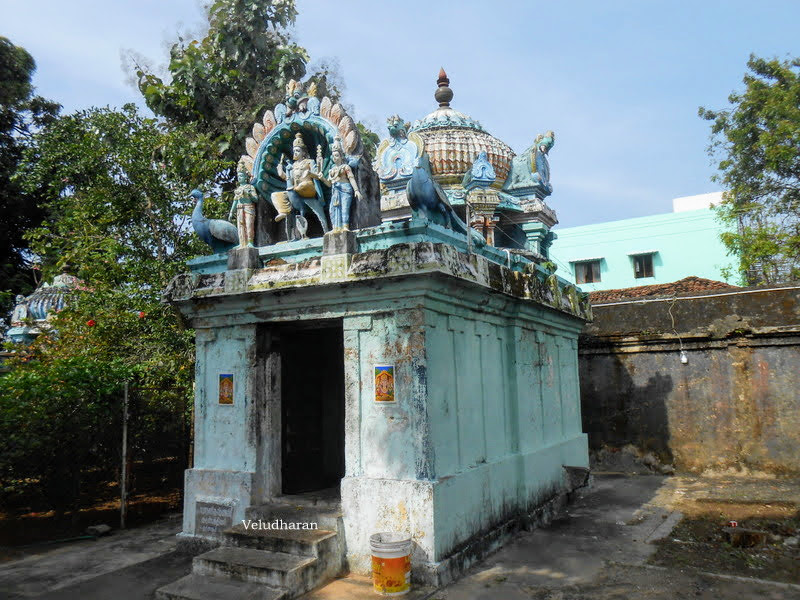
The temple faces east with an entrance mandapam. Stucco images of Vinayagar, Lord Shiva, and Parvati as Rishabaroodar and Murugan are on the top of the mandapam. Vinaitheertha Vinayagar is on the left side of the entrance mandapam. Balipeedam and Rishabam / Idabam with a mandapam are in front of the entrance mandapam. Stucco dwarapalakas are at the entrance of the sanctum sanctorum. Moolavar in the sanctum is a little Tall. In koshtam, Vinayagar, Dakshinamurthy, and Durgai.

In praharam Vinayagar, Sri Valli Devasena Subramaniyar, Ambal Sannidhi, Two Chandikeswarar, and (5 idols are inside, seem to be memorial stones in Anjali hastam, Moovar, Pichadanar,..), Suriyan, Agastheeswarar, Somanathar, Bairavar, and Chandran. Ambal is in a standing posture in a separate temple-like sannidhi. The sannidhi is with the Sanctum sanctorum and a mukha mandapam. Dwarapalakis are in front of the sanctum sanctorum.

Right, 2 are memorial stones ...?


ARCHITECTURE
The temple consists of the sanctum sanctorum, antarala, ardha mandapam, and Maha mandapam. 5 steps are provided to climb up the maha mandapam. Ardha mandapam and maha mandapam were built during the Thanjavur Nayaks / Maratha period. Both mandapas have two rows of pillars, which divide the mandapas into three sections. These mandapas are called Vavval nethi / vandi koodu mandapas.

The sanctum sanctorum is on a raised upanam with kapotam. The adhistanam on a upanam is of prati bandha adhistanam with Jagathy, muppattai Kumudam, prathi vari. The Bhitti starts with vedika. Vishnu kantha pilasters with a square base and Naga bandham, malai thongal, kalasam, thadi, kudam, mandi (Lotus petals), palakai veera kandam, and vettu poo mottu pothyal. The prastaram consists of valapi with lotus petals, kapotam has the karukku in the nasis, Chandra mandalam, and bhumi desam. The vimanam above the bhumi desam is of stucco without any images in the salai koshtam. The greeva koshtas have images of Dakshinamurthy, Maha Vishnu, Brahma, and Lord Shiva with Parvati. The sigaram is of vesara style with lotus petals, Kannadi sattam, and stupi. Mahanisis are in the cardinal directions, and alpha nasis are in between maha nasis.


HISTORY AND INSCRIPTIONS
The original temple is believed to have been constructed by Ko Chengat Chozha, and the same was reconstructed during the Chozha period; later contributions are from Thanjavur Nayakas and Marathas.

The ardha mandapam pillars and sanctum sanctorum walls have the inscriptions of Rajarajan-I, Rajendran-I, Kulasekara Pandyan, and Parakrama Pandya. As per the inscription, this place was called Arumozhitheva Valanattu Alanattu Keelaiyur. The inscriptions mainly record the Endowments established in the temple and land, money gifted to carry out the worship.


POOJAS AND CELEBRATIONS
Apart from regular Poojas, special Poojas are conducted on Pradosham, Maha Shivaratri days, Deepavali, Navaratri, Thirukarthigai, etc.

TEMPLE TIMINGS
The temple will be kept open from 07.00 hrs to 11.00 hrs, and from 17.00 hrs to 19.00 hrs.

HOW TO REACH
This place, Keelaiyur, is on the Nagapattinam – Velankanni- Thiruthuraipoondi bus route.
This temple is about 22.7 km from Nagapattinam Railway Station, 41 km from Karaikal,  30 km from Thiruvarur,  41 km from Mannargudi, and 324 km from Chennai.
The nearest Railway Station is Nagapattinam.

LOCATION OF THE TEMPLE: CLICK HERE


--- OM SHIVAYA NAMA ---

Thursday, 21 April 2022

Arulmigu Ranganatha Perumal Temple /அருள்மிகு ரங்கநாதா பெருமாள் டெம்பிள்/ ஸ்ரீ ரங்கநாதர் பெருமாள் கோவில் "கீழரெங்கம்", கீழையூர் / Keelaiyur, Nagapattinam District, Tamil Nadu.

The Heritage visit to this Sri Ranganatha Perumal Temple at Keelaiyur in Nagapattinam District was a part of the “Mada Temples Heritage Walk in Nagapattinam and Mayiladuthurai Districts”, organized by “Chozha Mandala Varalatru Thedal Kuzhu – GCHRG, on 05th and 6th March 2022.   Thanks to V Ramachandran, Tahasildar of Nagapattinam, who took us to all these Temples. Apart from Shiva temples, Ko Chengat Chozha built a mada temple to Maha Vishnu also and this is one of them.
 

Moolavar  : Sri Ranganatha Perumal
Thayar     : Sri Ranga Nayaki / Athiroopavalli

Some of the salient features of this temple are….
The temple faces South with a three-tier Rajagopuram. Balipeedam and Kodimaram are after the Rajagopuram on a platform, and mukha mandapam is 3 steps from the front platform. Thiruman, Sangu, and Chakra are at the top of the entrance to mukha mandapam. At the lower level, Alwars Thirumangai Alwar, Vedanta Desika, and Alwars are in the vavval nethi mandapam / vandi koodu mandapam. Hauman, Chakkarathalwar & Narasimhar, Thumbikai Alwar, and Vishwaksenar are in Praharam.  

On the upper level, Arulmigu Sri Sesha Sayana Perumal, Thayar Ranganayagi, and Andal.  Moolavar Ranganatha Perumal is in sayana kolam on Adhiseshan. Dwarapalakas are at the entrance of the ardha mandapam. Thayar Ranganayagi is in a standing posture facing east.


ARCHITECTURE
The temple is of mada style with an empty floor/ வெற்று தளம் raised to a height of 2.64 meters supported by Brahmakantha pilasters & vettu tharanga pothyals, prastaram, and a parapet wall. The main temple consists of the sanctum sanctorum, antarala, ardha mandapam, maha mandapam, and mukha mandapam. The maha mandapam and mukha mandapam are of Vavval nethi mandapams / vandi koodu may be built during the Maratha period. Garudan is at the centre of the 3 entrances of mukha mandapam. 

The sanctum sanctorum is in rectangular shape, measuring  5.83 meters in the South-North direction and 7.38 meters in the east-west direction. This is to accommodate Sri Ranganatha Perumal in Sayana Kolam, keeping the head on the west side. Moolavar is wearing  a silk dress, Mahara kundalas. Bhudevi is in a sitting posture near Perumal’s feet. On the floor is Markandeyar in Ardha Padmasana. Adhiseshan’s head and tail are shown on the east side. Utsava murti is with Sridevi and Bhudevi. Andal is holding a flower in the right hand.  

The koshtas are empty now. A 3-tier salakara Vimanam with 5 kalasams is in the sanctum sanctorum. From base to prastaram was built with stone, and the superstructure vimanam was built the bricks. The vimanam does not have stucco images except on the koshtas.      


HISTORY AND INSCRIPTIONS
It is believed that the original temple was constructed by the Chozha King Ko Chenkat Chozha.  Since Chozha’s capital, Kavipoompattinam, was destroyed due to the Tsunami – azhi peralai-to save from the tsunami, the temples along the sea shore were built as mada Temples. Later received contributions from Pallavas, Chozhas, and Vijayanagaras. No old inscriptions are found in this temple.

Jeernodhara Maha Kumbhabhishekam was conducted on 14th July 1968.

Thirupani to Moolavar and other sannidhi Vimanams, mandapams, madapalli, and inner compound wall were carried out, and maha Samprokshanam was carried out on 14th June 1971.

Again, Maha Samprokshanam was carried out on 27th August 2015 after forming the KSRP Trust. During that time, renovation and reconstruction of Yagasalai and mandapam were done by Sri K S Srinivasan, his Son, Rama Sreenivasan, daughter-in-law,  S Kumar Srivatsan, grandson son Sri Kumar Srikanthan, grandson, in loving memory of   Late Sri Paravasthu K R Sowrirajan Iyengar and late Smt Rajalakshmi Sowrirajan.  Thirupani to Vishwaksenar  Vimanam was done by Dr Sa. Parthasarathy from Raja Annamalaipuram, Chennai. Electrification of the Complete temple was done by Sankaran Ramamurthy from Nagapattinam, Thayar Sannidhi Vimanam thirupani was done by Smt Manjula and Sri Nagarajan family of Abu Dhabi, Chennai, Thirupani to Ranganayagi Thayar Vimanam was done by Smt Poongavanam (Singapore), and Kodimaram thirupani was done by G Kumaradevan Nagapattinam.

நள வருசம் சித்திரை (புலைசு) படைவீடு அம்பாசய்ய(ன்) இரங்கப்பராசா வேங்கடாத்திரி 106 உத்திராபதி ராசா ரெங்கப்பராசா தன்மம் (வா)வரதயா சதா சேர்வை 


ஸ்வஸ்திஸ்ரீ சகர வருசம் (1540) மேல் ஸ்ரீ சித்திரை புலை (6...) (அச்சம்?) மயிலவேங்கப்பைய.. வேங்கடாத்திரி ராசா அய்யாவு ராசா (2) லிங்கராசா தன்மம் க்ருஷ்ணந் சதாசேர்வை


POOJAS AND CELEBRATIONS
Apart from oru kala pooja, special poojas are conducted on Tamil and English New Year's, Vaikunta Ekadasi, Rama Navami, Hanuman Jayanthi, and all important functions related to Maha Vishnu.

TEMPLE TIMINGS
The temple will be kept open from 07.00 hrs to 11.00 hrs, and from 17.00 hrs to 19.00 hrs.

CONTACT DETAILS
The Mobile no of Bhattar +91 9786962538 may be contacted for darshan.

HOW TO REACH
This place, Keelaiyur, is on the Nagapattinam – Velankanni- Thiruthuraipoondi bus route.
This temple is about 22.7 km from Nagapattinam Railway Station, 41 km from Karaikal,  30 km from Thiruvarur,  41 km from Mannargudi, and 324 km from Chennai.
The nearest Railway Station is Nagapattinam.

LOCATION OF THE TEMPLE: CLICK HERE


--- OM SHIVAYA NAMA ---

Wednesday, 20 April 2022

Sri Adhi Kayarohaneshwarar Temple/ Melai Kayarohanam / ஸ்ரீ ஆதி காயாரோஹனேஸ்வரர் கோயில், Nagapattinam, Nagapattinam District, Tamil Nadu.

The Heritage visit to this Sri Adhi Kayarohaneshwarar Temple  near LIC, Sabam Theertha Vinayagar alias Kakka Kulam Pillayar Temple  at Nagapattinam in Nagapattinam District was a part of “Mada Temples Heritage Walk in Nagapattinam and Mayiladuthurai Districts”, organized by “Chozha Mandala Varalatru Thedal Kuzhu – GCHRG, on 05th and 6th March 2022. This temple is about 750 meters from Sri Neelayadhakshi Kayarohaneswarar, one of the 276 Thevara Paadal Petra Shiva Temples. Thanks to V Ramachandran, Thasildar of Nagapattinam, who took us to all these Temples. The temple complex consists of Sattayappar Temple, a Mada temple, and the Sri Adhi Kayarohaneswarar temple with Common parivara deities.


Moolavar: Sri Adhi Kayarohaneshwarar
Consort    : Sri Adhi Neelayadhakshi Amman

Some of the salient features of this temple are….
The temple faces east with a 3-tier Rajagopuram. Rishabam and balipeedam are in front of mukha mandapam.  Moolavar in the sanctum sanctorum is on a vesara avudayar. Dwarapalakas are at the entrance of the sanctum sanctorum.  Saneeswaran is on the north side of the entrance. In koshtam Vinayagar, Dakshinamurthy, Lingothbavar, Brahma, and Durgai. Ambal is in a separate sannidhi with abhaya varada hastam, and her upper hands are holding accamala and a flower bud.

The parivara sannidhis in the praharam are (Common for both temples) Chandikeswarar, Ayyanar, Maha Ganapathi, Sri Valli Devasena Subramaniyar, Gajalakshmi, Saraswati, Nagars under Peepal tree, Navagrahas, Suryan, Thirugnanasambandar in dancing posture, and Bairavar.

ARCHITECTURE
The Temple consists of the sanctum sanctorum, antarala, ardha mandapam, maha mandapam, and muka mandapam. The Mandapam, before the sanctum sanctorum and Ambal Sannidhi, has entrances on three sides. The center entrance is connected to the mukha mandapam. Balipeedam and Rishabam are at the mukha mandapam’s east entrance. The mukha mandapam is supported by 3 square pillars with pushba pothyal. The side entrances are 3 steps in Mughal architecture, built during the Maratha period.  The south entrance is with jumping yazhi pillars & pushpa pothyal. A stucco image of Neelayadakshi Ambal is on the top of the entrance. The maha mandapam pillars have the bas reliefs of Nachiapillai and his wife, who had done thirupani to Sri Adhi Kayarohaneswarar and Sri Adhi Neelayadakshi Amman sannidhis with inscriptions.

The paintings of Lord Shiva’s Ananda Thandavam, Uma Maheswarar, Sattanathar, and Dakshinamurthy are on the walls of the maha mandapam.

Ambal Sannidhi’s entrance is with Vishnu Kantha Pillars & sitting yazhi at the base. The Ambal temple adhistanam is of simple padabandha adhistanam, vedhika, Brahma kantha pilasters, and padra koshtas. The Vimana is of 3 tiers, and the koshtas are empty. Stucco images of Amman’s various forms are in the Vimanam's sala koshtam and greevam. Mukha mandapa koshtas are empty.

The main sanctum sanctorum is on a simple pada bandha adhistanam with jagathy, three patta kumuda, and pattikai. The Bhitti starts with vedika, and Brahmakantha pilasters are with vettu tharanga pothyals. Koshta salas are padra koshtams. The prastaram is with kapotam and viyyalavari. A two-tier stucco vesara vimanam is on the bhoomi desam.  Mahishasuramardini is on the north mukha mandapa koshtam. Dakshinamurthy sannidhi is added at a later date with a separate sannidhi not abutting the main wall. Dakshinamurthy is sitting in veerasana posture, wearing maha and padra kundalam and holding a snake, flame in the upper hands, and the lower right hand is in chin mudra, palm leaves suvadi in the front left hand. Sanakatha munis are on both sides.

Meru mandapa has seven steps. mukha mandapam is small, and the maha mandapam was built with brick and lime mortar. Kuda panchara is between the maha mandapam and the mukha mandapam. Maha mandapam and vimanam are with pada bandha adhistanam, vedika, Vishnu kantha pilasters with padam, pushba pothyals, mathalai in valapi, and end with kapotam. The vimanam salas are padra kostas / protruding outside, greevam, and vesara sigaram. The Greeva koshtas are empty.    


HISTORY AND INSCRIPTIONS
It is believed that the original temple was constructed before the Sri Kayarohaneswarar Temple, one of the 276 Thevara Paadal petra Shiva Temples, possibly during the Chozha King Ko Chenkat Chozha.  Later received contributions from Pallavas, Chozhas, Vijayanagaras, and Marathas.

The maha mandapam pillars have the bas reliefs of Nachiapillai and his wife, who had done thirupani to Sri Adhi Kayarohaneswarar and Sri Adhi Neelayadakshi Amman sannidhis with inscriptions.

LEGENDS
It is believed that this temple was constructed before the Sattainathar Temple and Sri Kayarohaneswarar Temple, one of the 276 Paadal Petra Shiva temples, by Pundariga Munivar. There are different cults that exist in worshiping Lord Shiva, like Maakalam, Kapalikam, Lakuleesam, etc. Of these, Lakuleesam was practiced popularly in North India, and Lakuleesar Statues are found in many parts of North India. The basic principle of this cult is to attain Lord Shiva’s feet with the mortal body ( Kayam = காயம்உடம்பு human body).

It is believed that Pundarika Maharishi, who practiced this Lakulisa Pasupata worshiped Lord Shiva of Kasi, Kanchipuram, and Kumbakonam, where the Kayarohanam or Karonam temples still exist. Hence, this temple of Shiva is called Sri Kayarohaneeswarar. The Full legend goes like this...

When Pundarika Munivar wanted to attain Mukti with his physical body, his father Karumathathan advised him to go and worship Lord Shiva of Kasi. There, he worshiped Viswanathar, Lord Shiva, for 2000 years, but Lord Shiva didn’t give darshan. Vamadeva Munivar advised him to go to Kanchi. Pundarika Munivar worshiped Kachi Karonam Shiva for another 12000 years. Here also, Lord Shiva didn’t give darshan. Instead, Lord Shiva asked him to come to Kumbakonam.  Pundarika Munivar came to Kumbakonam and established and worshiped Kudanthai Karonam Lord Shiva for another 8000 years. Here, Kanva Munivar advised him to go to Nagapattinam, where he established Kayarohaneswarar and worshiped for many years. After being satisfied with his worship, Lord Shiva told Pundarika Munivar that he would give mukti with his physical body on the 3rd Darshan.  With Severe penance, Pundarika Munivar attained mukti with his physical body on the third darshan. This legend of Pundarika Munivar attained Mukti, is celebrated every year on the Aani month Ayilya nakshatra day.     

POOJAS AND CELEBRATIONS
Apart from regular Poojas, special poojas are conducted on Pradosham, Maha Shivaratri days, Deepavali, Navaratri, Thirukarthigai, Pundarika Maharishi’s Mukthi day, etc.

TEMPLE TIMINGS
The temple will be kept open from 07.00 hrs to 11.00 hrs, and from 17.00 hrs to 20 hrs.

HOW TO REACH
This temple is about 750 meters from Sri Neelayadhakshi Kayarohaneswarar, one of the 276 Thevara Paadal Petra Shiva Temples.
This temple is about 1.5  km from Nagapattinam Railway Station, 20 km from Karaikal,  20 km from Thiruvarur,  53 km from Mannargudi, and 303 km from Chennai.
The nearest Railway Station is Nagapattinam.

LOCATION OF THE TEMPLE: CLICK HERE


Vali and Sukreeva 
Pundarika Maharishi worships Lord Shiva 


--- OM SHIVAYA NAMA ---