This
is the 72nd Thevara Paadal Petra Shiva Sthalam and the 18th sthalam
on the north side of the river Kaveri in Chozha Nadu.

As
per Historians, this place is a Paadal Petra Shiva temple based on the
inscriptions available in the temple. Sekkizhar mentions clearly that
Thirugnanasambandar visited this temple after Thirukkanur, which is about 5 km from this place; also, the temple has inscriptions from the Pallava Period. Lord
Shiva’s name is mentioned in the inscription, and the Thevara hymns are the same. Moreover, Thirugnanasambandar’s next visit was to Thirumanthurai, which is again 10 km.
However, some people and some websites claim that the Shiva Temple at Keelur or Kiluer
is the Padal Petra Sthalam. The KILUER (கிளுர்) referred to is more than 100 km from Thirukkanur, and the Temple does not have enough evidence, like inscriptions, to be a Paadal Petra Sthalam. The details of this
KILUER temple are also written at the end of this article. This
temple was built between the Kollidam and the Cauvery River in the midst of a Plantain/
banana grove. Now this place is called Tiruchinampoondi.
During the floods in the rivers, the temple was damaged and reconstructed by the
Tamil Nadu Government Archaeological Department. As per the Tamil Nadu Govt Archaeology Department’s
display at the site, this is one of Thirugnanasambandar’s Paadal Petra
Sthalam.
In Periya Puranam, Sekkizhar mentions that
Thirugnanasambandar came to this temple after worshiping Lord Shiva of Thirukkanur (Near Thirukattupalli) and
Thirumanthurai.
அதன் மருங்கு கடந்து அருளால் திருக்கானூர் பணிந்து ஏத்தி ஆன்ற சைவமுதல் மறையோர் அன்பில் ஆலந்துறையின் முன்னவனைத் தொழுது போற்றிப் பதம் நிறை செந்தமிழ்பாடிச் சடைமுடியார் பயில்பதியும் பணிந்து பாடிமதகரட வரை உரித்தார் வடகரைமாந்துறை அணைந்தார் மணிநூல் மார்பர்
Thirugnanasambandar and Ramalinga Adigalar have sung
Hymns in praise of Lord Shiva of this temple.
அருத்தனை அறவனை அமுதனை நீர்விருத்தனைப் பாலனை வினவுதிரேல்ஒருத்தனை யல்லது இங்கு உலகம் ஏத்தும்கருத்தவன் வளநகர் கடைமுடியே
“சடையிடைப் புனல்வைத்தச துரனிடம்கடை மூடியநன் அயல் காவிரியே“பொன்நிகழ் காவிரிப்பொரு புனல்சீர்சென்றடை கடைமுடிச் சிவனடியைநன்றுணர்ஞானசம்பந்தன்”..........
திருஞானசம்பந்தர் தேவாரம் -:மாவின் இடைமுடியின் தீங்கனியென் றெல்லின் முசுத்தாவுங்கடைமுடியின் மேவுங் கருத்தா...... திரு அருட்பா Moolavar :
Sri Thirukadaimudi Mahadevar or
Thiruchadaimudi Mahadevar
Some
of the important details are as follows...The
temple faces east with a Rishabam on a platform of the old mandapam. The
pillars of this muka mandapam are dumped on the north side of the temple. The
sanctum sanctorum consists of the sanctum, antarala, and artha mandapam. Only the
base of the Mukha mandapa exists now. Chandikeswarar is on the
north side near komukha.
ARCHITECTUREThe
temple is somewhat similar to the Srinivasanallur near the Trichy Shiva temple.
Adhisthana is kapota bandha adhisthanam with miniature reliefs on the
Kandapatham and vedhikandam. Yazhi Vari is just above the kapotam. The
pilasters are with 8-faced Vishnu Kantha - pada pillars, hanging mala,
kumbam, kalasam, and pothyal. The vimana above the sanctum exists up to
the first level.


HISTORY AND
INSCRIPTIONSThe
original temple was built by the Pallavas and later extended by the Chozhas. The
Archaeology Department claims that this temple is one of the Thevara Vaippu
sthalam, a hymn sung by Thirugnana Sambandar. (But this is not in the Vaippu
sthalangal list). Once this temple was in a dilapidated condition and
refurbished to some extent by the Tamil Nadu State Archaeological Department; regular poojas were conducted.
As
per the inscriptions, Lord Shiva is called Thiruchadaimudi Mahadevar
or Thirukadaimudi Mahadevar. The temple has 21 inscriptions of
Thellatrerintha Nandhivarman-III (846-869 CE) and Nrupathunga Varman (865 -
906 CE) of Pallava Kings, Chozha King Parantaka-I (907-950 CE), and Ko
Ilango Mutharaiyar.
The
Pallava King Nandivarman III’s 18th reign year 864 CE inscription, on
the right of the entrance into the Sadaiyar temple, records the gift of 60
kalañcu of gold by the king to god Mahādēva at Tirukkadaimudi for burning two
perpetual lamps. The sabhaiyār of Anbil agreed to supply daily (nal(1)var) one
nāli of ghee to the temple priest (ariccippār kaiyiley), obviously for the
lamps, out of the interest on the gift-money received.
The Pallava King Nandivarman III’s reign inscription, on a pillar and another
one to the west of it in front of the Sadaiyar temple, records a gift of 17
kalañcu of gold to god Mahādēva (at Tirukka-daimudi) by Adigal Kandan
Mārampāvai, the queen of Nandippōttaraiyar of the Pallavatilaka family, for
celebrating the Masi-magam festival every year (in the temple). The gift was
deposited with the merchant community (arugaivānigar) of Srikantapuram. The
stipulation was for maintaining the following charities in the temple to
provide for sacred bath to the deity on the first day of the festival out of
(i) the interest on (the first) seven kalañcu of gold fixed as seven kalam of
rice at the rate of one kalam per kalañcu, with five nāli of ghee, milk, curd,
and 20 tender cocoanuts; and for food-offerings, to (god), inclusive of the
attendant deities in the sanctum (aganāligai parivāram), with three kuruni of
rice, one nāli of ghee for tiruvamirdu and a sacred lamp, two nāli of curd,
vegetable for the tiruvamirdu, sugar plaintains and twenty areca-nuts. The
extra rice was to be used for feeding the brāhmanas and holymen (adigalmār),
(ii) to provide for the supply of 100 scented flower garlands (narum-pūnūru)
and unguents (orilai-candu) on the seven days (of the factival) using the
interest fixed at the rate of kalancu on two kalancu of gold that was balance
of the amount used for the festival; (iii) to provide for feeding brāhmaņas and
holy-men (adigalmar) with twelve nāli aud one uri of ghee out of the interest
on 14 kalañcu of gold; and (iv) to provide for avi (oblation) and 108 kalasam
of holy-water on the eve of the sacred bath of the deity (tirunamanam) with the
interest on the remaining seven kalañcu of gold fixed as 1 kalañcu at the rate
of kalañcu per year.
The said gift was entrusted with the Arugaivānigar of Śrī Kantapuram, a
dēvadāna of Eyyi-nādu.
The Pallava King Nandivarman III’s period inscription on the second pillar in
the Sadaiyar temple, records the purchase of 1 (vēli?) of land for eight
kalañcu of gold from the urar of Suraikkudi in Purakkiliyūrnādu by
Kumaranaliyānilai an Arugai-vānigan, a resident of the ward (seri) of
Viraikkattipādi for (donating to) god Perumānādigal of Tirukkadaimudi, to
provide for midday food-offerings to the god with four uri of rice and pidi of
ghee. The Panmāhēśvaras who were in charge of the administration of the temple
were given one kalam of paddy. The gifted land was to have one ma of land for
narrukkal (land for seedlings).
The Pallava King Nandivarman III’s reign inscriptions on the second and third
pillars in front of the Sadaiyar temple, records a gift of 61 kalañcu of gold
by Adigal Kandan Mārampāvai (the queen of Nandippōttaraiyar of the
Pallavatilaka family, (obviously to god Mahādēva at Tirukkadaimudi) for
performing the sacred bath ceremonies to the god (of the temple) during the
Aippigai and Chittirai visu (the vernal and autumnal equinoxes) with five nāli
of ghee, milk and curd, and provide food-offerings on the occasion with four
nāli of rice, tender cocoanuts full of water, plaintain and sugar, and perform
worship with (narumpüccaadu) (flowers and scandal-paste?) and unguents
(kungiliyam). It is also stated that 50 brāhmaņas, five bachelor-servants of
the temple (tirukkōvil paņiseyyum manigal) and adigalmārum (holymen) and
panisey makkalum (temple servants) should be fed on those particular days. The
Arugaivānigar of Sirikanțapuram,
a dēvadāna
of Eyyinādu,
undertook to maintain the charity instead of the interest on the gift-gold,
fixed at kalañcu
and five mā
(mañcādi?),
calculated at the rate of 1/8 pon per kalañcu (per year).
The Nrpatungavarman’s 18th reign year 887 CE inscription, on the
second and third pillars in front of the Sadaiyar temple, records a gift of 12
kalañcu of gold to god Perumānadigal of Tirukka-daimudi, by Nakkańkāļi,
daughter of Devanär of Srikantapuram(?) for a perpetual lamp to be lit daily
with one ulakku (of ghee). The gift amount was entrusted to the temple
committee (perumānadigal variga) of Peruñcēriyār in Śrīkaņțapuram.
The
Pallava King Nrpatungavarman’s 22nd reign year, 891 CE inscription,
on a pillar in front of the Sadaiyar temple, records a gift of ten cows by
Tindīśvari (?) of Kachchippēdu for the sacred bath (of the god) with milk, ghee
and curd on the days of full-moon (uvā), Ardra (tiruvādirai) and Jyēsta
(tirukkēttai) every month to god Mahādēva at Tirukkadaimudi so long as the Sun
and Moon endure. The charity was left under the protection of the
Panmāhēśvarar.
The Pallava King Nrpatungavarman’s 22nd day of the 11th reign
year 891 CE inscription on a pillar in front of the Sadaiyar temple, records
that the chief Vettuvadiyaraiyar of the Ko[n*]danādu endowed 12 kalañcu of
gold to god Mahadevar at Tirukkadaimudi, for a perpetual lamp.
The Pallava King Nrpatungavarman’s 22nd reign year, 891 CE, inscription on the fourth pillar in front of the Sadaiyar temple, records a
gift of 12 kalañcu of gold by Silayan of Tindiyur to god Mahādēva at
Tirukkadaimudi for burning a perpetual lamp with ghee. The gift was entrusted
to the Peruncēriyar of Srikantapuram for maintaining the endowment.
The Pallava King Nrpatungavarman’s 2nd reign year inscription on the second and third pillars in front of the Sadayar temple; though the king's name is lost in this
record, he may be identified with Nrpatungavarman, since the present record is
preceded by and similar in form to some epigraphs of this king from the
same place.
The Pallava King…. 25th reign year, 894 CE inscription on a slab built into the
vimāna of the Sadaiyar temple, records the gift of gold equal to that of
palańkāšu for feeding Panmaheśvara on the day of flag-hoisting festival,
evidently in the temple. Koperakesaribarmar’s 2nd-year reign inscription (AR 282 of 1901, SII-VII 502) records
the endowment of burning a sandhi lamp (Day Light) for which 6 kalanju gold
was gifted by Velar’s daughter Kuzhambathadigal Soolai Olai Karpagam.
Thellarerintha
Nandhivarman's 18th-year reign inscription (AR 283 of 1901, SII
VII-503) records the endowment of 2 perpetual lamps and Naivedyam from the interest earned, for which 60
kalanju gold was gifted. Another 2nd-year reign inscription ( AR 295
of 1901, SII VII-516 ) records the endowment of a burning perpetual lamp for
which 90 sheep / Goats as saava moova peradukaL were gifted.
Madurai Konda
Koparakesari’s 29th-year reign inscription (AR 284 of 1901, SII-VII
504) records the endowment of burning a Lamp for day and night with ulakku
ghee, for which 15 Kalanju- 6 manjadi (fraction) gold was gifted to the temple
by a person from Anbil. The same King's 30th-year reign inscription (AR 285 of 1901, SII-VII 505) records the endowment of burning a perpetual lamp
for which 6 kalanju gold was gifted by a person’s sister called Kootra Devi.
Another 34th-year reign inscription (AR 286 of 1901, SII-VII 506)
records the endowment of burning Lamps with
2 ulakku ghee, Day and Night lamps, and an Entrance lamp, for which 12
Kalanju gold and 3 Kasu were gifted. 505
to 512 record the endowments of burning lamps. The same King (year missing), Inscription (AR 293 of 1901, SII-VII
513) records the endowment of celebration of Masi Maha Thiruvizha, Naivedyam,
for which a land was donated after purchase by Kiliyur Nattu........ Pidaran.
517,518, 519, 520 inscriptions record the endowment of burning lamps and other
donations.
Nrupathunga
Vikramabarmar, 22nd-year reign inscription (AR 300 of 1901, SII-VII 521) records the
endowment of supplying Milk, curd, and
ghee for three days, Monday, Thiruvathirai, and Kettai Nakshatra days, for which 10 cows were donated. The inscription No. 522 also records the burning of
Perpetual lamps for which 12 Kalanju gold was gifted. 526, 527, and 628 record
the endowment of burning perpetual lamps.
Kovilango
Mutharaiyar’s 13th-year reign inscription (AR 303-D of 1901, SII-VII 529) records the
endowment of burning perpetual lamps for which 12 Kalanju gold was gifted to
this temple by Aey nattu Attupalli Niyamathu Arinjigai Purathu Devan’s daughter
Nakkan...
One
of the inscriptions speaks about the village court, where Arukai merchants, Boatmen, and Velalar gave donations in terms of gold for burning perpetual lamps. Gold
was also donated to this temple for conducting the 7-day Masi Maha festival by
Nandhivarmans’ wife & Queen Mahadevi Adikal Kandan Maran Pavai.
Pazhuvettayar’s daughter Parantakan Devi Arulmozhi Nangai also donated a gift to
this temple.
Ref1. South Indian Inscriptions Volume - VII.2. Annual Report on South Indian Epigraphy 1901. 3. ARE 1901.4. IAR, 1970-1, no. 57, 22.

 Pallava Inscriptions
 Pallava Inscriptions
HOW
TO REACH:There
is no public transport up to this temple, and transport facilities are available to
Poondi Madha Basilica and Thirukattupalli.6.4
km from Poondi Madha Basilica, and autos are available from the Basilica.The
temple is 26 km from Thiruvaiyaru, 31 km from Trichy, 40 km from Thanjavur, and
342 km from Chennai.The nearest
Railway station is Trichy.
LOCATION
OF THE TEMPLE: CLICK HERE


 Lord Shiva's dance


 Pichadanar

 Gajasamhara Moorthy
 Kudakooththu


 A Hero fighting with an elephant
  Hiranya vatham....?
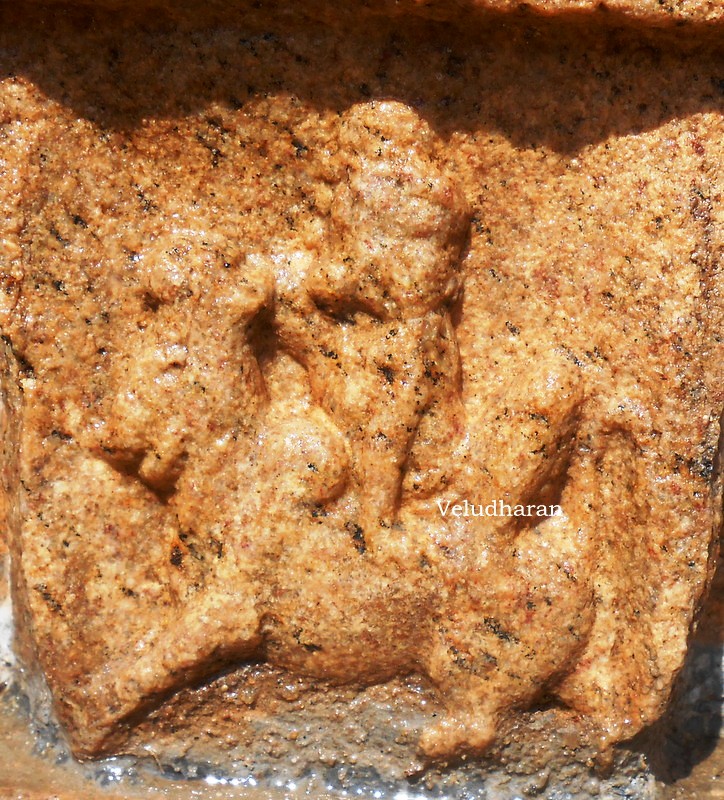
 A pregnant lady is being assisted with the delivery
 Veena Dakshinamurthy
 Brahma

 Mahalakshmi
 Lord Muruga

SRI
KADAIMUDINATHAR TEMPLE / MAHADEVAR TEMPLE / SEMMALAI NATHAR TEMPLE,
KILUER - கிளுர் – (THIRUKADAIMUDI), NAGAPATTINAM DISTRICT, TAMIL
NADU.

Moolavar : Sri Kadaimudinathar, Sri Anthi
Samraksneeswarar.Consort : Sri Abirami.
Some
of the important features of this temple are as follows.The
temple faces east with balipeedam and Rishabam. Moolavar is a little taller,
Made of Navapashanam (as per Gurukkal) with 16 faces of Dharalingam. In Koshtam, Vinayagar, Dakshinamurthy, Lingothbavar, Brahma, and Durgai.
In the praharam, Vinayagar, Subramaniyar, Bhairavar, and Moovar. The Lord Shiva of
this temple was worshiped by Kanva Maharishi. A vesara vimana is over the
sanctum. 
CONTACT
DETAILS :Gurukkal
Sankar can be reached on his mobile at 9095120653.
HOW TO
REACH :The
temple is on the bus route from Mayiladuthurai to Poompuhar; after the Chathram stops, the
place is called Kiluer.The
temple is 3.7 km from Sembanarkoil, 14 km from Mayiladuthurai, 16 km from
Sirkazhi, 37 km from Chidambaram, and 254 km from Chennai.The nearest
Railway Station is Mayiladuthurai.
LOCATION OF
THE TEMPLE: CLICK HERE


 ---OM
SHIVAYA NAMA---
---OM
SHIVAYA NAMA---

In Periya Puranam, Sekkizhar mentions that
Thirugnanasambandar came to this temple after worshiping Lord Shiva of Thirukkanur (Near Thirukattupalli) and
Thirumanthurai.
முதல் மறையோர் அன்பில் ஆலந்துறையின் முன்னவனைத் தொழுது போற்றிப்
-:மாவின்


The Nrpatungavarman’s 18th reign year 887 CE inscription, on the
second and third pillars in front of the Sadaiyar temple, records a gift of 12
kalañcu of gold to god Perumānadigal of Tirukka-daimudi, by Nakkańkāļi,
daughter of Devanär of Srikantapuram(?) for a perpetual lamp to be lit daily
with one ulakku (of ghee). The gift amount was entrusted to the temple
committee (perumānadigal variga) of Peruñcēriyār in Śrīkaņțapuram.
The
Pallava King Nrpatungavarman’s 22nd reign year, 891 CE inscription,
on a pillar in front of the Sadaiyar temple, records a gift of ten cows by
Tindīśvari (?) of Kachchippēdu for the sacred bath (of the god) with milk, ghee
and curd on the days of full-moon (uvā), Ardra (tiruvādirai) and Jyēsta
(tirukkēttai) every month to god Mahādēva at Tirukkadaimudi so long as the Sun
and Moon endure. The charity was left under the protection of the
Panmāhēśvarar.
The Pallava King Nrpatungavarman’s 22nd day of the 11th reign
year 891 CE inscription on a pillar in front of the Sadaiyar temple, records
that the chief Vettuvadiyaraiyar of the Ko[n*]danādu endowed 12 kalañcu of
gold to god Mahadevar at Tirukkadaimudi, for a perpetual lamp.
The Pallava King Nrpatungavarman’s 22nd reign year, 891 CE, inscription on the fourth pillar in front of the Sadaiyar temple, records a
gift of 12 kalañcu of gold by Silayan of Tindiyur to god Mahādēva at
Tirukkadaimudi for burning a perpetual lamp with ghee. The gift was entrusted
to the Peruncēriyar of Srikantapuram for maintaining the endowment.
The Pallava King Nrpatungavarman’s 2nd reign year inscription on the second and third pillars in front of the Sadayar temple; though the king's name is lost in this
record, he may be identified with Nrpatungavarman, since the present record is
preceded by and similar in form to some epigraphs of this king from the
same place.
The Pallava King…. 25th reign year, 894 CE inscription on a slab built into the
vimāna of the Sadaiyar temple, records the gift of gold equal to that of
palańkāšu for feeding Panmaheśvara on the day of flag-hoisting festival,
evidently in the temple.


Pallava Inscriptions

Pallava Inscriptions


Lord Shiva's dance


Pichadanar


Gajasamhara Moorthy

Kudakooththu



A Hero fighting with an elephant

Hiranya vatham....?

A pregnant lady is being assisted with the delivery

Veena Dakshinamurthy

Brahma


Mahalakshmi


Lord Muruga


The details given here is wrong, The 18th Vadakarai temple is Keelayur near mayiladuthurai - poompuhar route , Please correct your excellent work. Its a guide to so many people. Thanks for the Great work.
ReplyDeleteDear Sundaram.. I had written the details for both the temples... I had made study on this... Since the Tiruchinampoondi temple was considered as the Padal petra sthalam, the reasons are given in the first two paragraphs of this article. Based on the period of construction, the Thirugnanasambandar's route, as explained by Sekkizhar are taken in to account and came to a conclusion that Thiruchinampoondi is the Padal Petra sthalam... ... The archaeology department also confirms the same... Request you to go through once again the article and further clarifications if required, can you please call me... Thanks and regards
Delete